
What a Pool Equipment Diagnostic Covers
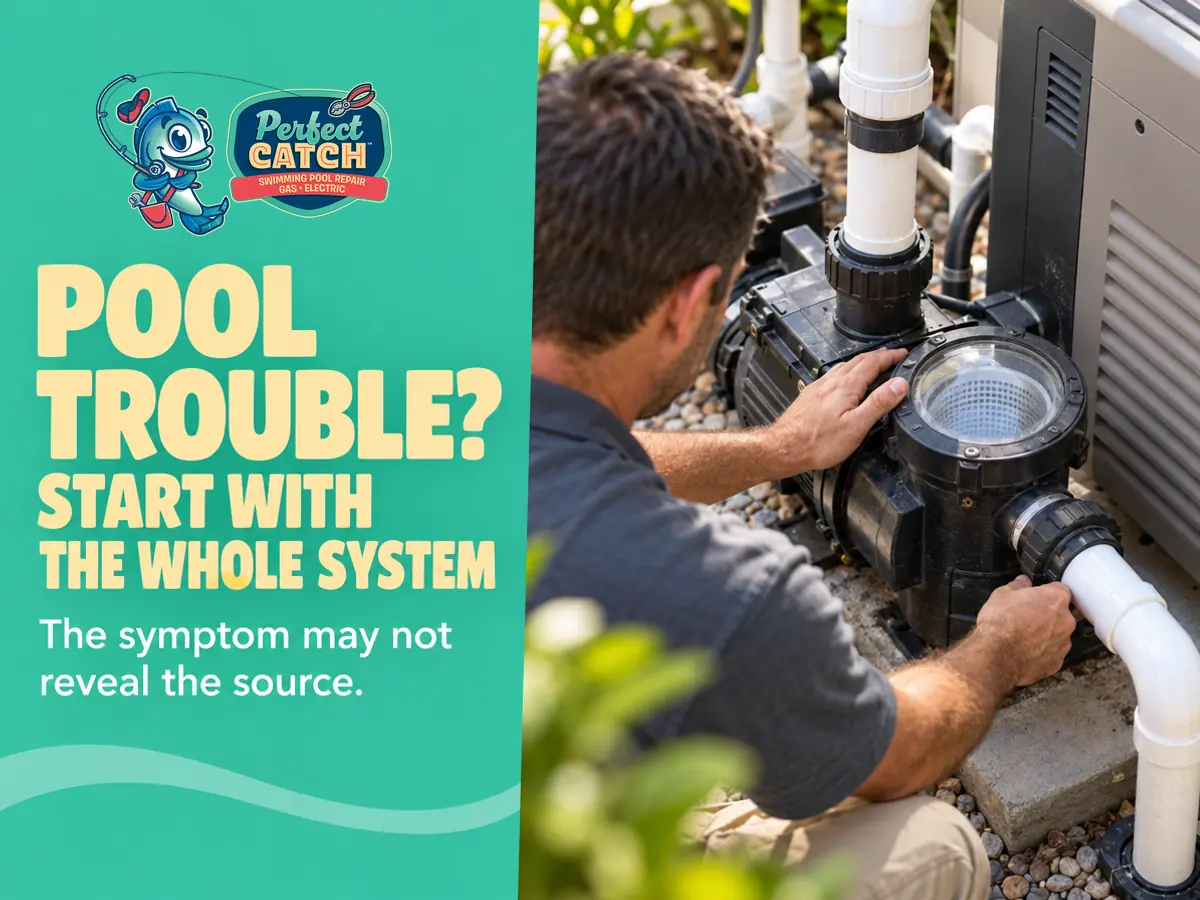
Most pool equipment problems start the same way. Something sounds different, the water looks off, or a light on the panel starts blinking. The temptation is to replace the most obvious part, usually the most expensive one, and hope that fixes it.
A proper diagnostic works the other way around. The tech checks the whole system in a logical order, starting with the simple things, so the repair you pay for is the one that actually solves the problem.
What does a pool equipment diagnostic include?
A diagnostic is a check of the full equipment pad, not just the part that seems to have failed. On a Perfect Catch visit, the tech checks the pump, filter, heater, bonding, and the power feeding the pad. Here is what the tech is looking at in each area.
| Equipment | What the tech looks at |
|---|---|
| Power and controls | Breakers, timers, automation settings, and GFCI protection |
| Water level and valves | Whether the skimmer is pulling air and whether valves are set correctly |
| Pump and motor | Priming, unusual noise, leaks at the seals, and whether it moves water as it should |
| Filter | Pressure reading, the condition of the cartridge, sand, or DE grids, and the valve position |
| Heater or heat pump | Error codes, water flow, and ignition or compressor operation |
| Salt system | Cell condition, salt level, and chlorine output |
| Plumbing | Visible leaks at unions and fittings, and signs of air getting into the suction side |
| Bonding and wiring | Damage, corrosion, loose connections, or anything unsafe near the water |
Why the order matters
A heater will not fire without enough water flow. Flow depends on the pump, which depends on a good prime, which depends on water level and clean baskets. If a tech jumps straight to the heater, they might replace a part that was never the problem.
That is why a good diagnostic starts with power, water level, and valve positions, moves through the pump and filter, and only then looks at the heater, salt cell, and automation. Because Perfect Catch holds pool, electrical, and gas licenses, the same tech can follow a problem from the pump to the breaker panel or the gas heater without stopping to call in another contractor.
Common symptoms and what they often turn out to be
Pump runs but water is not moving. Often a clogged basket, a low water level, a closed valve, or an air leak on the suction side. A pump that keeps losing prime is usually drawing air somewhere, not failing.
Pump hums but will not start. Frequently a failed capacitor, though a seized motor can sound similar. Our guide to a pump that hums but will not start explains what is safe to check yourself.
Breaker keeps tripping. Stop resetting it. A pump that keeps tripping the breaker can point to a wiring or motor fault, which is a safety problem around water.
Filter pressure is high. Usually a dirty filter. If it climbs again right after cleaning, something else is restricting flow.
Heater will not turn on. Could be low flow, a tripped pressure switch, a thermostat setting, or an ignition problem, depending on the unit. If you smell gas, leave the area and call right away.
Salt system shows low output. A scaled cell, low salt, cold water, or a cell near the end of its life. A salt cell that is not making chlorine is more often a chemistry or flow issue than a broken unit.
What you can do before the tech arrives
- Take photos of any error codes or warning lights
- Note when the problem started and what happened just before it, like a storm, a power outage, or a filter cleaning
- Write down your most recent water test results
- List anything you have already tried, such as resetting a breaker or cleaning the filter
- Unlock the gate or share the code
- Clear plants, toys, and stored items away from the equipment pad
Storms, surges, and outages around Largo
Around Largo and the rest of Pinellas County, summer storms and power outages are a common trigger for equipment trouble. Surges can damage control boards and motors, and wind-blown debris can clog baskets and filters. After a storm, check the water level, empty the baskets, and look for warning lights before starting everything back up. If something will not restart, or a breaker trips the moment it does, that is the time to book a diagnostic.
What the diagnostic costs, and what you get at the end
Perfect Catch charges one flat fee for the trip and the diagnostic, and you hear the amount when you book. Approve the repair during that same visit and the fee comes off the repair price. By the end of the visit, you should have:
- A plain-language explanation of what failed and why
- A flat-rate price in writing before any work begins
- Repair options and, when it makes sense, a comparison with replacing the unit
- Suggestions to keep the problem from coming back
Once a repair is done, the equipment is run and tested before the tech leaves, and the work is covered by a written one-year parts and labor warranty. If the equipment is older and the repair is a big one, ask whether an equipment upgrade makes more sense. A variable-speed pump, for example, may cost less to run over time. A good tech lays out both choices without pushing either one.
FAQ
How fast can someone come out?
Most Pinellas County calls are handled the same day or the next day. Urgent problems, like a dead pad in the summer heat, a gas smell, or a pool breaker that keeps tripping, go ahead of routine calls.
Can I keep running the pump if it sounds bad?
If it is grinding, screeching, or tripping the breaker, turn it off and call. Running it can turn a small repair into a replacement.
How do I know if I need repair or replacement?
Age, the cost of the repair, part availability, and what the equipment costs to run all matter. Ask the tech to price both.
What should I do with the water while the equipment is down?
Keep chlorine up by hand if you can, and brush the pool to slow algae growth until circulation is back.
If something at your pad is not working right, book pool repair with Perfect Catch or read more about our pool repair service. We are a pool repair company in Largo working on pumps, filters, heaters, and salt systems across Pinellas County, and you can reach us at (727) 316-5206.