
How to Tell Your Pool Pump Needs Repair
Pool pumps signal problems before they fail completely. Catching the issue at the warning stage usually keeps a repair viable and avoids a full motor replacement.
- Grinding, squealing, or rattling sounds during operation
- Pump runs but water flow to the pool is noticeably reduced
- Pump loses prime frequently or fails to prime at all
- Motor overheating or shutting off before a full cycle completes
- Visible cracks or leaks around the pump housing or connections
- Pump draws power but nothing moves — impeller is not spinning
- Energy bills climbing without a clear explanation
Any of these signs call for a professional inspection. A technician with both pool and electrical credentials can determine whether a targeted repair is viable or whether a replacement is the better investment.
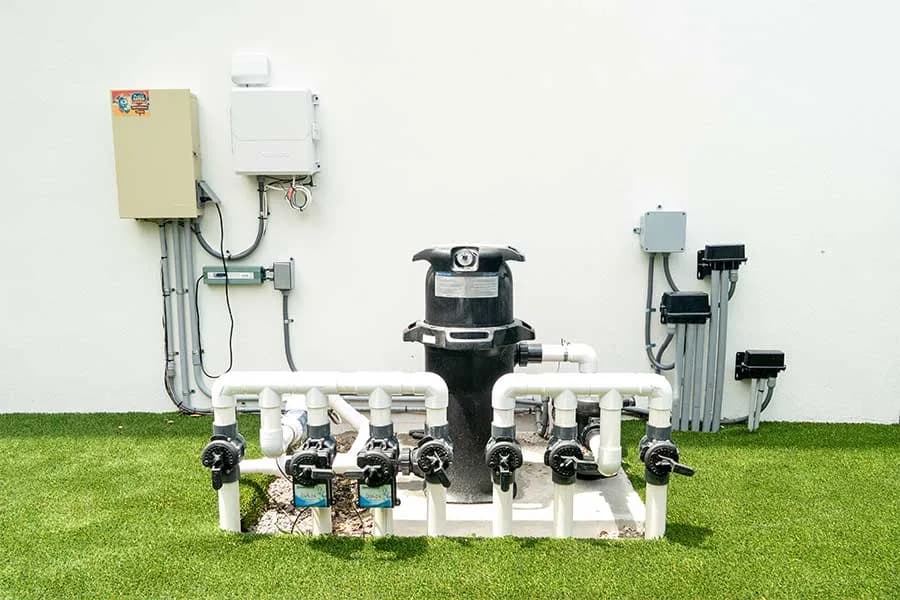
Common Pool Pump Problems We Fix
Florida's heat and year-round operating schedule accelerate wear on seals, bearings, capacitors, and impellers faster than seasonal climates. The most common pump repairs we handle in Largo include failed capacitors preventing motor startup, worn shaft seals allowing water into the motor, clogged or broken impellers reducing flow, overheating motors from restricted airflow or voltage issues, and corroded or cracked pump housings — across all major pump types and brands.
Choosing the Right Pump for Your Pool
When a pump has reached the end of its useful life, we help you select a replacement sized correctly for your pool's volume, plumbing configuration, and energy efficiency goals. Single-speed pumps are straightforward but expensive to run year-round. Variable-speed pumps use significantly less electricity, qualify for utility rebates in many cases, and are the standard recommendation for Largo's twelve-month pool operating season. Two-speed models are a mid-point option where variable-speed infrastructure is not practical. We walk you through the options based on your specific pool and budget — no oversell, no pressure toward equipment you do not need.
Variable Speed Upgrades: Savings & Rebates
A variable speed pump uses a permanent magnet motor that operates at any speed across a programmable range: slow for overnight filtration, medium for daytime circulation, high for water features or spa jets when in use. Power consumption scales with the cube of motor speed — running a pump at half speed uses roughly one-eighth the energy of full speed, not half. For Largo homeowners running a pool twelve months a year, that relationship produces significant savings from the first billing cycle after installation.
- Significantly lower monthly electricity costs from operating at appropriate speeds for each task
- Quieter operation at low and medium speeds than a single-speed pump at constant full power
- Better filtration quality from longer, slower circulation cycles
- Longer pump lifespan from reduced mechanical stress
- Full compatibility with pool automation systems for remote scheduling and speed adjustment
- Eligibility for energy efficiency rebates from many Florida utility companies
For a Largo pool running year-round, annual electricity savings from a variable speed upgrade typically range from several hundred to over a thousand dollars depending on utility rates, pool size, and daily runtime — most installations pay for themselves within two to four years. We calculate the correct sizing before recommending any unit, program speed schedules for your pool's actual use patterns, and test through all programd speeds before we sign off. Some Florida utility companies offer rebates for qualifying installations — check with your utility provider for current availability.
Our Repair & Installation Process
Every pump call starts with a full inspection of the pump, motor, plumbing connections, and electrical supply. We diagnose before quoting — you know exactly what the problem is and what it costs to fix before any tools come out. For repairs, we carry common replacement components to handle most jobs in a single visit. For installations, we size the new pump correctly, handle all plumbing and electrical connections under our own licenses, and test the unit under full operating load before we leave.
Frequently Asked Questions
How long do pool pumps last?
Most pool pumps last between eight and twelve years, though Florida's year-round operation and heat can shorten that range. Regular maintenance and prompt attention to early warning signs extend pump life considerably.
Should I repair or replace my pump?
A licensed technician can evaluate the pump's age, condition, and repair cost versus replacement cost. We provide honest guidance based on what actually makes financial sense for your situation.
Do you install variable speed pumps?
Yes. We install variable speed pumps for Largo homeowners — sizing, installation, programming, and testing in a single visit.
Is your pricing upfront?
Yes. Every pump repair and installation is priced upfront and approved before work begins.
Is the work under warranty?
Every pump repair and installation we complete is backed by our warranty.