Signs Your Pool Has an Electrical Problem
Pool electrical faults do not always announce themselves clearly. Some develop slowly before they create obvious failures or safety hazards. These signs require a licensed electrician's attention — not a wait-and-see approach.
- Any tingling or shock sensation when touching pool water, handrails, or ladders
- Pool lights, pump, or equipment tripping GFCI breakers repeatedly
- Equipment that fails to start, starts intermittently, or shuts off unexpectedly
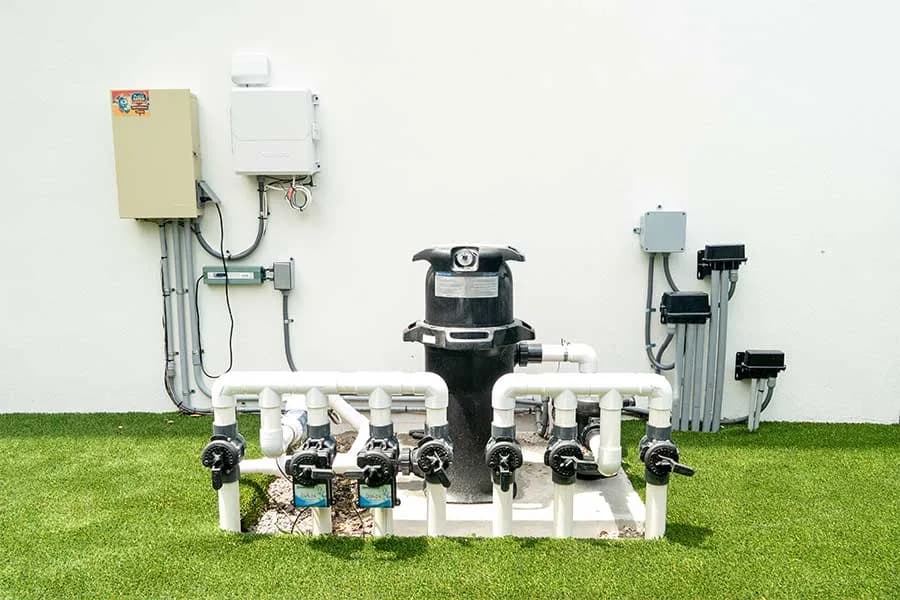
- Visible corrosion or damage on conduit or junction boxes at the equipment pad
- Breaker for pool equipment tripping under normal operating conditions
- Burning smell near pool equipment or the panel serving pool circuits
- Pool lights flickering, dimming, or showing water inside the fixture
Pool Electrical Hazards You Should Never Ignore
The combination of water, electricity, and outdoor exposure makes pool electrical systems uniquely hazardous when faults develop. Florida's environment accelerates the conditions that create those faults: salt air corrodes bonding connections, UV exposure degrades conduit, heat cycling loosens connections, and year-round operation means equipment never gets a rest period.
Pool bonding connects all metal components of the pool structure and equipment to equalize voltage potential. When bonding connections corrode or fail, voltage differences develop between the pool water and surrounding surfaces, creating shock hazards for anyone in or near the water. A licensed electrician needs to inspect the bonding system regularly and any time work is done on pool equipment or structure.
GFCI breakers that trip frequently are not a nuisance — they are detecting a fault that needs to be diagnosed and corrected. Replacing a tripping GFCI without finding and fixing the underlying fault is not a repair. It is a deferred hazard.
Pool Electrical Services We Provide in Largo
We provide a full range of pool electrical services for Largo homeowners, covering repair work and new installations across all pool electrical systems.
- Pool bonding system inspection, repair, and installation to current code requirements
- GFCI protection installation and fault diagnosis for pool circuits
- Pool light wiring, conduit inspection, and fixture electrical repair
- Equipment electrical connections for pumps, heaters, automation systems, and chlorinators
- Dedicated circuit installation for new pool equipment
- Subpanel and breaker work serving pool equipment pads
- Electrical inspection and code compliance review for pool systems
Our Repair & Installation Process
Pool electrical work starts with a full safety inspection of the affected system and any related circuits. For repairs, we identify the specific fault before quoting — you know what caused the problem and what it takes to correct it. For new installations, we review existing infrastructure to confirm the new circuit can be added correctly without compromising the rest of the system.
We handle all required permitting for pool electrical work in Largo, complete all work to current National Electrical Code requirements for pool installations, and test all circuits and bonding continuity before signing off. Every pool electrical repair and installation is backed by our warranty.
Pool Bonding to NEC 680
Pool wiring faults create risks beyond equipment failure. When wiring degrades or bonding systems fail, voltage can develop in pool water or on metal surfaces that swimmers contact. Electric shock drowning is a known, preventable hazard associated with pool bonding failures — and it is eliminated by maintaining pool wiring and bonding systems in correct working condition.
Bonding work on pools is governed by NEC 680, the National Electrical Code article for pool installations. We refresh bonding connections at all metal pool components, verify bonding continuity, and confirm GFCI protection is correctly installed on all circuits. In Largo's outdoor environment, the factors that degrade bonding are always present: salt air corrodes bonding connections and conduit fittings, heat cycling loosens terminal connections over time, and UV exposure degrades conduit seals. Periodic inspection is the most cost-effective way to manage these risks.
Pool Wiring & Rewiring
Pool wiring encompasses all electrical circuits serving pool equipment and features: pump and motor circuits, heater electrical connections, pool light wiring and conduit, automation and control system wiring, the pool bonding system, and GFCI protection on all pool circuits.
Rewiring typically involves replacing degraded conduit and wiring runs from the equipment pad to each connected component, updating corroded or cracked junction box covers and fittings, refreshing bonding connections at all metal pool components, and confirming GFCI protection is correctly installed on all circuits. In older installations, rewiring may also involve updating wiring gauge or circuit configurations to meet current electrical code requirements for pool installations. Every rewiring project starts with a complete electrical inspection covering all circuits, conduit runs, junction boxes, bonding connections, and GFCI devices — the inspection drives the scope and the quote before work begins.
Frequently Asked Questions
Can I use my pool with an electrical problem?
No. If you are experiencing any tingling in the water, frequent GFCI trips, or any electrical fault near the pool, the pool should not be used until a licensed electrician has inspected and cleared the system. Electric shock risk in pool water is a serious hazard that requires professional evaluation before swimming resumes.
What is pool bonding and why does it matter?
Pool bonding connects all metal pool components with a continuous conductor to equalize voltage potential. When bonding is intact, there is no voltage difference between surfaces in and around the pool. When bonding fails, voltage differences create shock hazards. Bonding must be inspected regularly and after any work on pool structure or equipment.
Why does my pool equipment keep tripping the breaker?
Repeated breaker trips indicate a fault in the circuit — a ground fault, an overload, or a short. Common causes include ground faults in pool lighting or equipment wiring, overloaded circuits, or failing equipment drawing excess current. The fault must be diagnosed and corrected, not simply reset.
Is your pricing upfront?
Yes. We provide upfront pricing on every pool electrical repair and installation before work begins.
Is the work covered by a warranty?
Every pool electrical repair and installation we complete is backed by our warranty.