
You Live in the Lightning Capital of North America
The Tampa Bay area — Largo, Pinellas County, and the surrounding region — records more lightning strikes than anywhere else in North America. That is not a marketing line; it is a fact of living here. A strike does not need to hit your house to do damage. A strike on a utility line, a transformer, or a neighboring property can push thousands of excess volts through the wiring that feeds every device you own. Smaller surges happen constantly, too — utility grid switching, large motors cycling on and off, and even your own AC compressor create voltage spikes that quietly wear down electronics over time.
What Surges Actually Destroy
Modern homes are full of sensitive circuit boards, and a surge does not discriminate. The most common casualties we see after storm season in Largo:
- Air conditioning systems — compressor boards and control electronics are among the most expensive surge casualties
- Kitchen appliances — refrigerators, ranges, dishwashers, and microwaves all run on circuit boards now
- Pool equipment electronics — variable-speed pump drives, heater boards, salt systems, and pool automation panels are all surge-vulnerable
- Televisions, computers, and home office equipment
- Garage door openers, smart home devices, and security systems
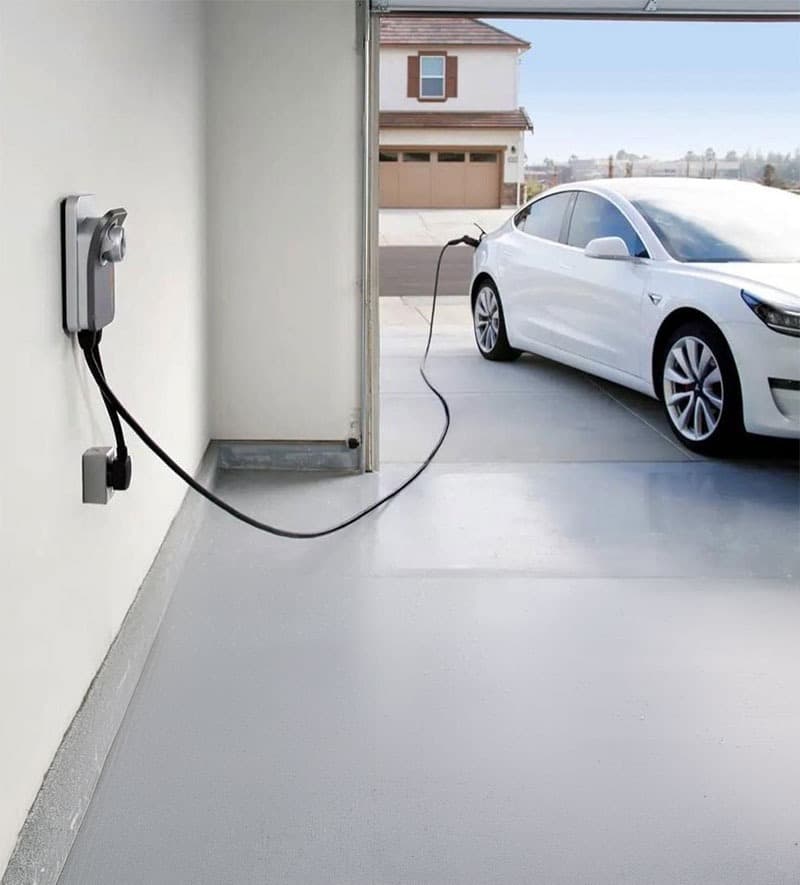
- EV chargers and other high-value electrical equipment
One significant surge can take out several of these at once — a repair bill that dwarfs the cost of protecting the panel in the first place.
Panel-Mounted Surge Protection — Protection at the Source
A whole-home surge protective device (SPD) mounts at your electrical panel and intercepts surges where they enter the home — before they reach a single circuit. When the SPD detects excess voltage, it diverts that energy safely to ground instead of letting it travel through your wiring to your appliances and electronics. Because it protects at the panel, every circuit in the house is covered: the AC, the kitchen, the pool equipment pad, the bedrooms, all of it.
SPD installation is panel work — it requires opening the panel, connecting to breakers or the bus, and verifying the grounding system the device depends on. This is a job for a licensed electrician, and it is one we do routinely under EC13011994. Installation typically takes a single visit.
Layered Protection Works Best
The best surge defense uses layers. The panel-mounted SPD is the first and most important layer — it absorbs the big hits at the service entrance. Quality point-of-use surge protectors at sensitive equipment — the home office, the entertainment center, the pool automation panel — form the second layer, catching the smaller residual energy that gets past the first. Neither layer replaces the other: a power strip alone cannot absorb a near-strike surge, and a panel SPD alone leaves the last few volts of let-through to reach your most delicate electronics. We will recommend a layered setup matched to what your home actually contains.
After a Strike: Lightning-Strike Evaluation
If lightning has struck your home or very close to it, do not assume everything is fine because the lights came back on. Surge damage can be hidden — scorched connections inside the panel, compromised wiring insulation, and partially damaged breakers that fail later. We offer a post-strike safety evaluation: a systematic check of the panel, grounding system, GFCI protection, and affected circuits, with a clear report of anything the strike damaged and what it will take to make it right.
Frequently Asked Questions
Does a whole-home SPD protect against a direct lightning strike?
No device can guarantee protection from a direct strike to the home — that is an enormous amount of energy. What a panel-mounted SPD does exceptionally well is protect against the far more common events: nearby strikes, utility surges, and internally generated spikes. Layered with point-of-use protection, it dramatically reduces the damage risk that Largo homes face every storm season.
Aren't power strips enough?
No. Point-of-use protectors handle small residual surges but cannot absorb the energy of a major event, and they only protect what is plugged into them — not your AC, kitchen appliances, or pool equipment. They are the second layer, not the first.
Will it protect my pool equipment?
Yes — because the SPD protects at the panel, the circuits feeding your pool equipment pad are covered, including variable-speed pump drives, heater boards, salt systems, and automation panels. These are some of the most expensive electronics on the property.
How long does installation take?
Most whole-home SPD installations are completed in a single visit, including the grounding verification.
Is your pricing upfront?
Yes. We provide upfront pricing on every surge protection installation before any work begins, and the work is backed by our warranty.