
How Our Home Charging Station Installation Works
Every installation starts with a site assessment covering your electrical panel's available capacity, the mounting location, the conduit run required from panel to charger, and the charger model's mounting requirements. This determines the full installation scope before any work is quoted. We then handle the complete installation under our own license: pulling any required permits, running the dedicated 240-volt circuit, installing the mounting hardware, making all electrical connections, and testing the charger through a full charge initiation before we sign off.
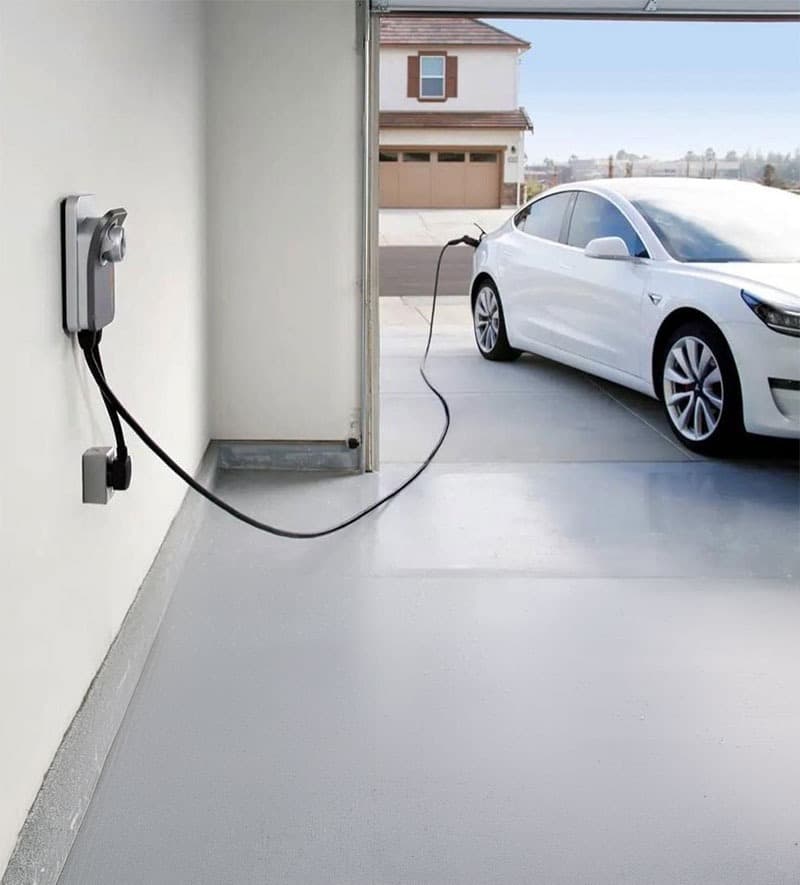
Level 1, Level 2 & Level 3: Your Options
Level 1 charging uses a standard 120-volt outlet and adds roughly 3 to 5 miles of range per hour — workable only for very short daily commutes. Level 2 uses a dedicated 240-volt circuit and adds 15 to 30 miles of range per hour depending on the charger and vehicle; it can fully replenish most EVs overnight and is the standard choice for residential installations. Level 3 (DC fast charging) requires three-phase commercial service not available in residential settings — for home installs, Level 2 is the practical maximum. We install Level 2 home charging stations for Largo residents across all major EV brands.
Why Every EV Owner Needs a Home Charger
- Wake up to a fully charged vehicle every morning — no planning or detours
- Level 2 speeds significantly faster than a standard 120-volt outlet
- Lower per-mile charging cost compared to public charging network fees
- No dependence on public charger availability or functionality
- Smart charger scheduling to charge during off-peak electricity rate hours
- Increased home value as EV adoption makes home charging a sought-after feature
Largo Permit Requirements
EV charger installations in Largo require an electrical permit from the local building department in most cases. The permit process ensures the installation is inspected and confirmed to meet current electrical code — which protects you and satisfies most homeowner's insurance requirements for permitted work. We manage the permitting process start to finish as part of the installation scope, and we do not sign off until the permit inspection is passed.
Tax Credits & Rebates
Federal tax incentives for home EV charger installations have been available under residential energy efficiency credit programs — availability and amounts depend on current federal tax law and your personal tax situation, so we recommend consulting a tax professional. Some Florida utility companies also offer rebates for home EV chargers or smart chargers that enable time-of-use scheduling; check with your utility provider for current programs.
Frequently Asked Questions
How long does installation take?
Most home EV charger installations are completed in a single day. Timeline can extend if the conduit run is long or if panel capacity work is needed before the dedicated circuit is added.
Will my panel need an upgrade?
It depends on your panel's current capacity and how many circuits are already in use. We assess panel capacity during the site evaluation and advise you if an upgrade is needed.
Which charger should I buy?
The best charger depends on your vehicle's connector type, preferred smart features, and installation location. We advise Largo homeowners on charger selection based on their specific vehicle and installation.
Is your pricing upfront?
Yes. We provide upfront pricing on every EV charger installation before work begins.
Is the installation warrantied?
Every EV charger installation we complete is backed by our warranty on the installation work.