
Saltwater Pool Equipment Corrosion: What to Watch
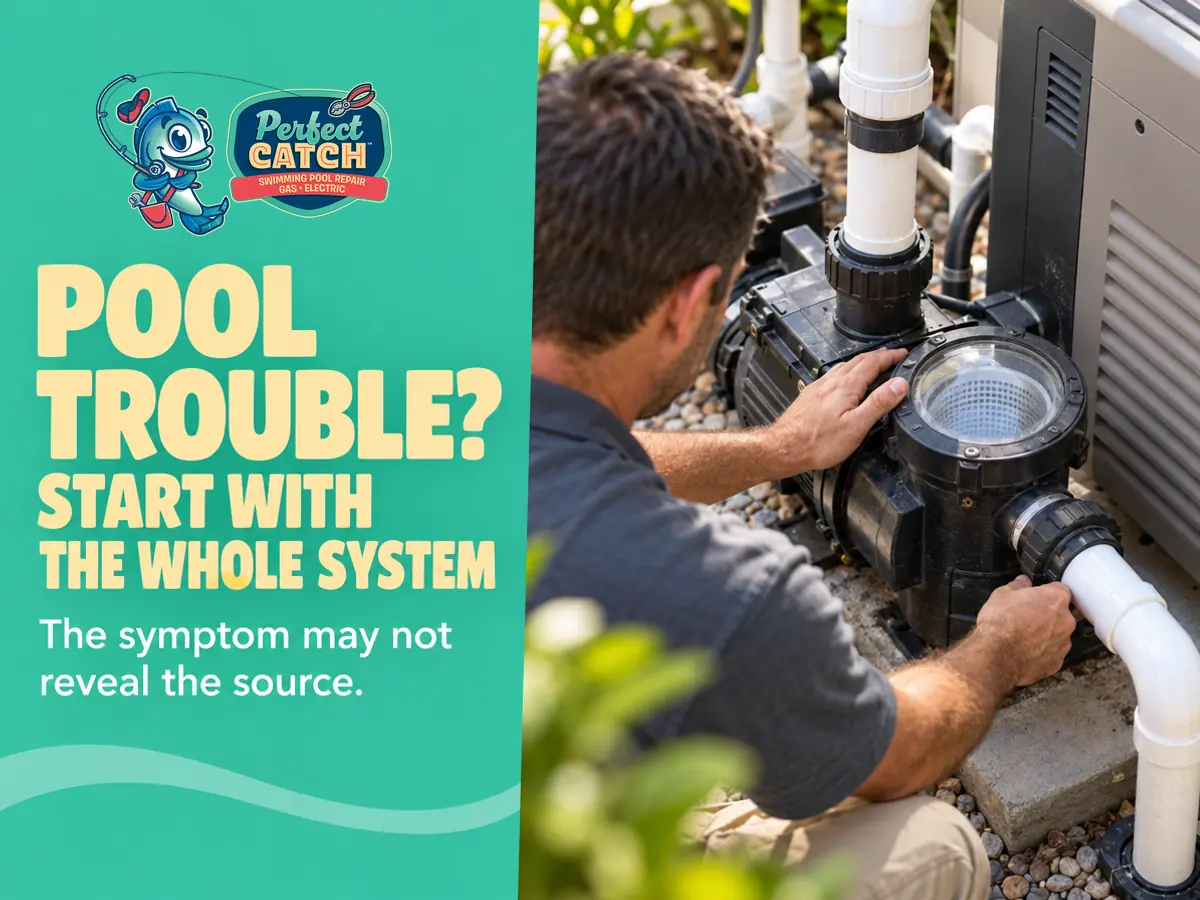
A salt system takes a lot of the chore out of keeping a pool sanitized. What it does not do is protect your metal. Salt water, a pH that wanders, weak electrical bonding, and cheap hardware all work together to eat away at heaters, light rings, rails, and fasteners.
For pool owners around Largo, Seminole, and the rest of Pinellas, here is where corrosion tends to start, what you can check yourself, and when it is time for a technician.
The usual first victims
| Equipment | Why it goes early | What you will notice |
|---|---|---|
| Heater heat exchanger and headers | A heater not built for salt, plus chemistry swings | Drips under the heater, error codes, crusty orange buildup |
| Light niches and rings | Different metals sitting in water together | Pitting, green or white crust |
| Handrails and ladders | Thin stainless in a constant splash zone | Brown "tea" staining, rough spots |
| Pump and filter bolts | Low-grade hardware and small leaks left alone | Seized bolts, rust stains on the pad |
| The salt cell | Scale and plates wearing out | Weak chlorine output, frequent clean-cell warnings |
Chemistry and bonding come first
- Keep salt inside the range your chlorinator's manufacturer lists. Extra salt does not make the water any cleaner.
- Keep pH and alkalinity steady. Big swings speed up metal damage.
- Make sure the bonding wire and clamps around the pool are intact. Broken bonding can cause odd, concentrated corrosion.
- Hose off rails and deck hardware after weeks of heavy use.
- When parts get replaced, ask whether the new metal is compatible with what is already there.
Our summers make all of this harder. Hot afternoons, heavy evaporation, and pop-up storms move chemistry fast, so a cell that behaved all winter can scale up by August. Pick a testing routine you will actually stick with.
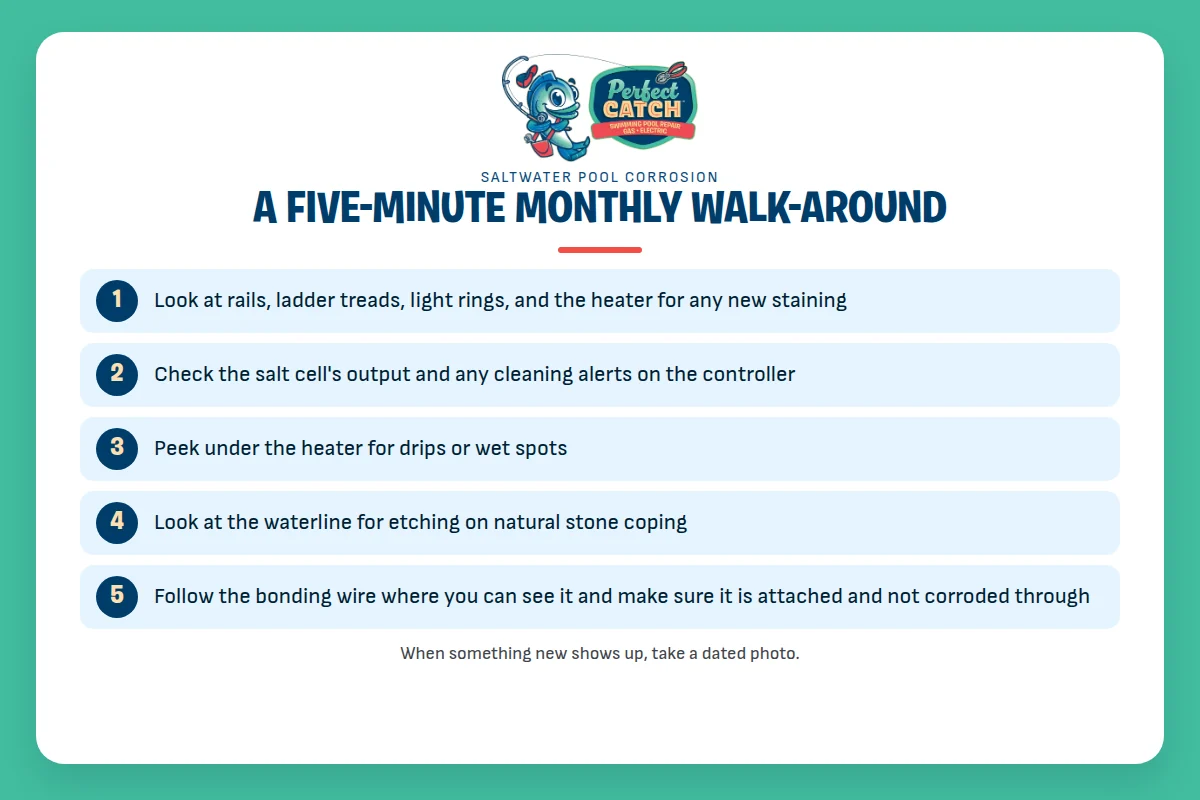
A five-minute monthly walk-around
- Look at rails, ladder treads, light rings, and the heater for any new staining
- Check the salt cell's output and any cleaning alerts on the controller
- Peek under the heater for drips or wet spots
- Look at the waterline for etching on natural stone coping
- Follow the bonding wire where you can see it and make sure it is attached and not corroded through
When something new shows up, take a dated photo. A record of when stains appeared helps a tech tell whether the fix is chemistry, bonding, or parts.
Not every heater belongs on a salt pool
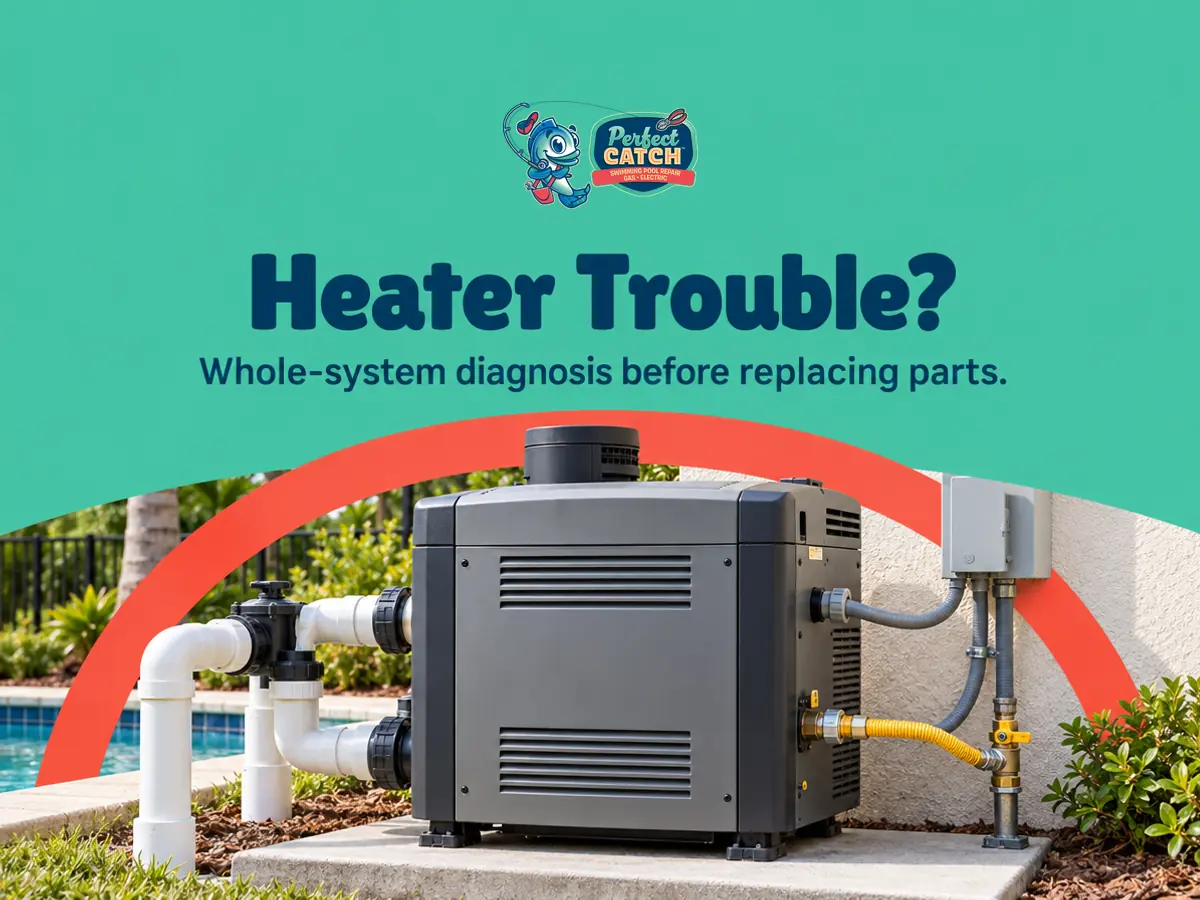
Heaters made for salt use exchangers designed to handle it. If a previous owner or contractor installed a heater without checking, early leaks are common. Before replacing a heater a second time, have the chemistry and the heater's materials checked together so you do not buy the same problem twice.
Salt cell care
Clean the cell when the controller asks, using only the method the manufacturer approves. Never scrape the plates with a screwdriver or metal pick, since that damages the coating. If scale comes right back after a cleaning, look at pH, runtime, and calcium before blaming the cell. Our help article on a salt cell that is not generating chlorine walks through those checks.
A tingle near the pool is an emergency
If anyone feels a tingle or shock from a rail, ladder, light, or anything near the equipment, get everyone out of the water, shut off power if you can do it safely, and call a licensed professional right away. Do not test it yourself. Bonding and stray current problems also tend to leave strange, localized corrosion that gets worse while you wait.
After storms and busy weeks
Big summer storms can leave standing water around the heater and push leaves and debris against the pump and cell. Check the equipment pad once the weather clears. Long stretches of guests and splashing raise the salt load on rails and shorten the time between cell cleanings.
Polish, patch, or replace?
A rail with light brown staining can often be polished and protected. Pits deep enough to catch a fingernail usually mean the part should be replaced. A leaking heater that was never rated for salt typically needs a salt-rated replacement rather than another patch. Ask for the chemistry and the metals to be checked on the same visit.
Lights and niches
Light rings and niches corrode quietly until a simple bulb change turns into a big job. If you see green or white crust around a light, photograph it and have it checked before the niche is damaged. Do not force seized screws, since that can crack the surrounding surface.
Soft stone at the waterline
Unbalanced water can etch natural stone coping even when metal parts look fine. That is usually a chemistry fix, not a sign the salt system is the problem. Mention it when you book so the tech looks beyond the equipment pad.
When to call us
- A heater that is leaking
- Stainless pitting that showed up within a single season
- Any tingle or shock near the pool
- A cell that will not hold output after cleaning
- Crust on lights that comes back weeks after you wipe it off
Perfect Catch handles salt system repair in Largo and nearby, along with heaters, pumps, and lights. If you are not sure what you are looking at, reach out to our pool repair company in Largo and send a few photos.
FAQ
Will salt always ruin a pool heater?
No. A heater built for salt, steady chemistry, and good bonding go a long way. The wrong combination can fail quickly.
Should I switch back to chlorine tablets to protect my equipment?
Sometimes that makes sense. Talk with a tech first so the pool stays properly sanitized during the change.
Why do rails stain so fast close to the Gulf?
Salt air, splash, and thin stainless are a tough mix. Rinsing helps. Deep pitting needs a professional look.
Can bonding problems cause corrosion in just one spot?
Yes. Stray current can leave odd, concentrated damage. Bonding repairs are a job for a licensed professional.